The materials

The leathers we keep.

Every case begins as a single hide. These are the skins the atelier works — each with its own grain, its own way of catching the light, its own way of ageing. Chosen by character, not by name.

No two hides are alike, and none is without marks. Wrinkles, and variation in scale, follicle and grain, are the nature of a natural skin rather than faults in it — a hide that read as perfectly even would not be a genuine one.

The leathers come from responsibly and ethically managed sources.
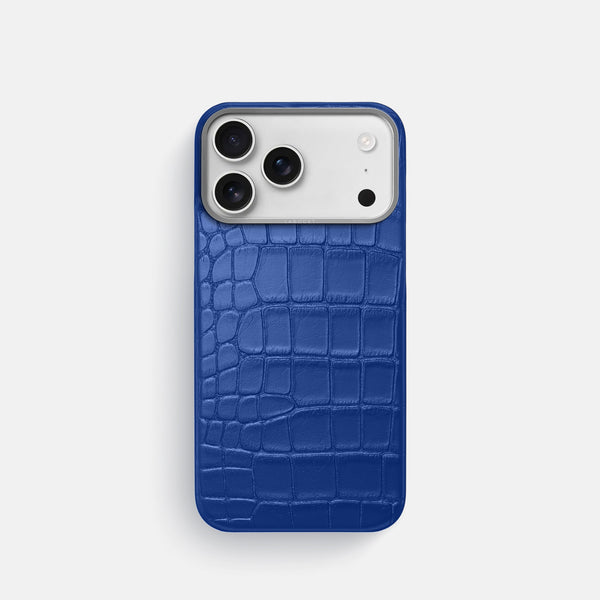
The most uniform of the crocodilian skins. Symmetrical belly scales soften from wide tiles at the centre to fine rows at the edge, with a clean matte grain. The reference exotic — quiet rather than loud.

Care

Wipe along the scale with a soft dry cloth. Keep away from prolonged damp and direct heat; let any moisture dry on its own, never with a dryer. Stored in its felt pouch, it holds for years.

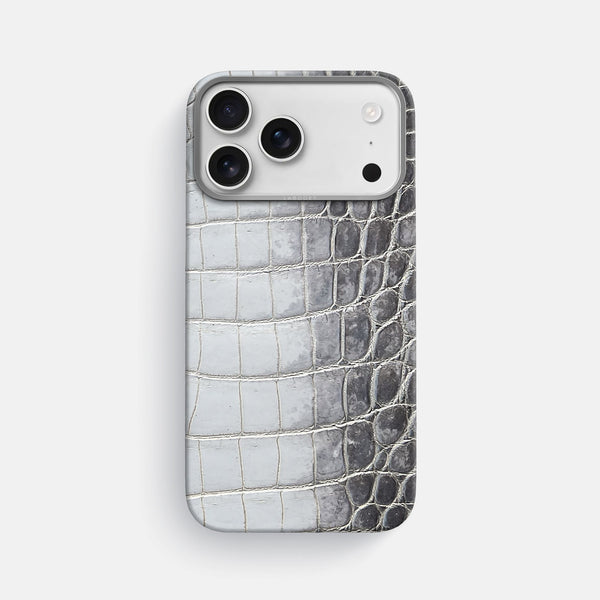
Named for the hand-graded fade from cream to shadow that recalls snow settling on stone. Each scale carries the fine follicle mark of a true crocodile, and no two gradients fall the same way.

Care

The dye is hand-worked, so keep it from water and strong light, which lift tone unevenly. Dry cloth only; let it breathe in a cotton pouch.

Read at a glance by its quill follicles — the raised dots left by feathers, densest across the crown of the hide where the skin is most prized. Naturally oiled, supple, more forgiving of daily handling than the scaled skins.

Care

Its own oils do most of the work. A dry cloth is enough; avoid solvents that strip the natural oils. Keep from sustained heat.

Alligator finished with a hand-rubbed patina that darkens the high points and leaves the valleys lighter, so the scale structure reads with depth. Each piece is shaded by hand and keeps deepening with light handling.

Care

The surface tone is worked by hand — keep from water and heat, which disturb it. Dry cloth, gentle pressure, with the scale.

The most regarded of the crocodiles. Fine, near-symmetrical scales each carrying their follicle mark, and a denser, firmer structure than alligator — a more pronounced, sculptural surface.

Care

Wipe with the scale using a dry cloth. Keep dry and cool; pat away any moisture at once and let it air-dry, never near heat.

Alligator polished by agate stone until the surface holds a deep, even shine — the traditional glazing of fine crocodilian work. The gloss is drawn from the skin itself, not a coating.

Care

The glaze marks more readily than a matte finish; handle with dry hands, wipe softly with the scale. Keep from water, which clouds the shine.

The house's non-exotic ground note. Smooth full-grain with a soft hand that takes on a quiet patina with handling — the skin lived with, not preserved.

Care

A dry cloth keeps it clean day to day. It will deepen and mark gently with use; that is the material, not a fault.

Calfskin pressed with a fine cross-hatch grain, firmer and more structured than smooth calf. The grain resists marking and holds a crisp edge — the most hard-wearing of the house's hides.

Care

The most forgiving skin here. A damp cloth lifts most marks; dry it naturally. Still no heat, no solvents.

The smallest scale the house works. A close, even grain with a natural sheen, light in the hand — suited to the smallest pieces where a larger scale would overwhelm.

Care

Wipe with the grain; the small scales catch if rubbed against direction. Keep dry and out of strong sun.

The most graphic of the skins — a wide mosaic of scales running the length of the hide, light and supple in the hand. Worked strictly in the direction of the scales, and dyed cleanly across a broad range.

Care

Wipe only in the direction of the scales; against them they lift and catch. Slight scale movement with wear is normal. Keep dry and away from heat.

Python taken further — hand-toned in dyed gradients so colour moves across the mosaic rather than sitting flat. The most worked of the snake skins, and the most singular piece to piece.

Care

Hand-toned, so keep from water and strong light that shift the gradient. Wipe softly with the scales, in their direction only.

Not a single skin but a standing — the rarest hides the atelier holds back, each made into one piece and never repeated. Whatever the leather, when it carries this mark it is sold once.

Care

Care follows the underlying leather of the piece. Each One of One ships with its own note.

Alligator finished so a fine metallic film catches in each scale and shifts with the light. The scale structure stays fully legible beneath the sheen.

Care

The metallic surface is delicate to abrasion — dry cloth, light hand, always with the scale. Keep from water and heat.

Begin with the leather.

Browse the collection